Home

Desktop-First Observability Platform for Local Development
Introducing ollyScale
ollyScale is an OpenTelemetry-native observability platform evolved from the excellent TinyOlly project.
Repository: https://github.com/ryanfaircloth/ollyscale
Why ollyScale?
Why send telemetry to a cloud observability platform while coding? Why not have one on your desktop?
ollyScale is a lightweight OpenTelemetry-native observability platform built to visualize and correlate logs, metrics, and traces. No 3rd party observability tools - just Python (FastAPI), Redis, OpenAPI, and JavaScript.
Key Features
- Development-focused - Perfect your app's telemetry locally before production
- Full OpenTelemetry support - Native OTLP ingestion (gRPC & HTTP)
- Pre-built Docker images - Deploy in ~30 seconds from Docker Hub
- Multi-architecture - Supports linux/amd64 and linux/arm64 (Apple Silicon)
- Trace correlation - Link logs, metrics, and traces automatically
- Metrics Explorer - Analyze cardinality, labels, and raw series data
- Service catalog - RED metrics (Rate, Errors, Duration) for all services
- Interactive service map - Visualize dependencies and call graphs
- OpenTelemetry Collector management - Remote configuration management via OpAMP protocol
- REST API - Programmatic access with OpenAPI documentation
- Zero vendor lock-in - Works with any OTel Collector distribution
Local Development Only
ollyScale is not designed to compete with production observability platforms! It's for local development only and is not focused on infrastructure monitoring at this time.
Platform Support
Tested on:
- Docker Desktop (macOS Apple Silicon)
- Minikube Kubernetes (macOS Apple Silicon)
- May work on other platforms
Quick Start
Ready to try ollyScale? Check out the Quick Start Guide to get running in under 5 minutes!
Screenshots
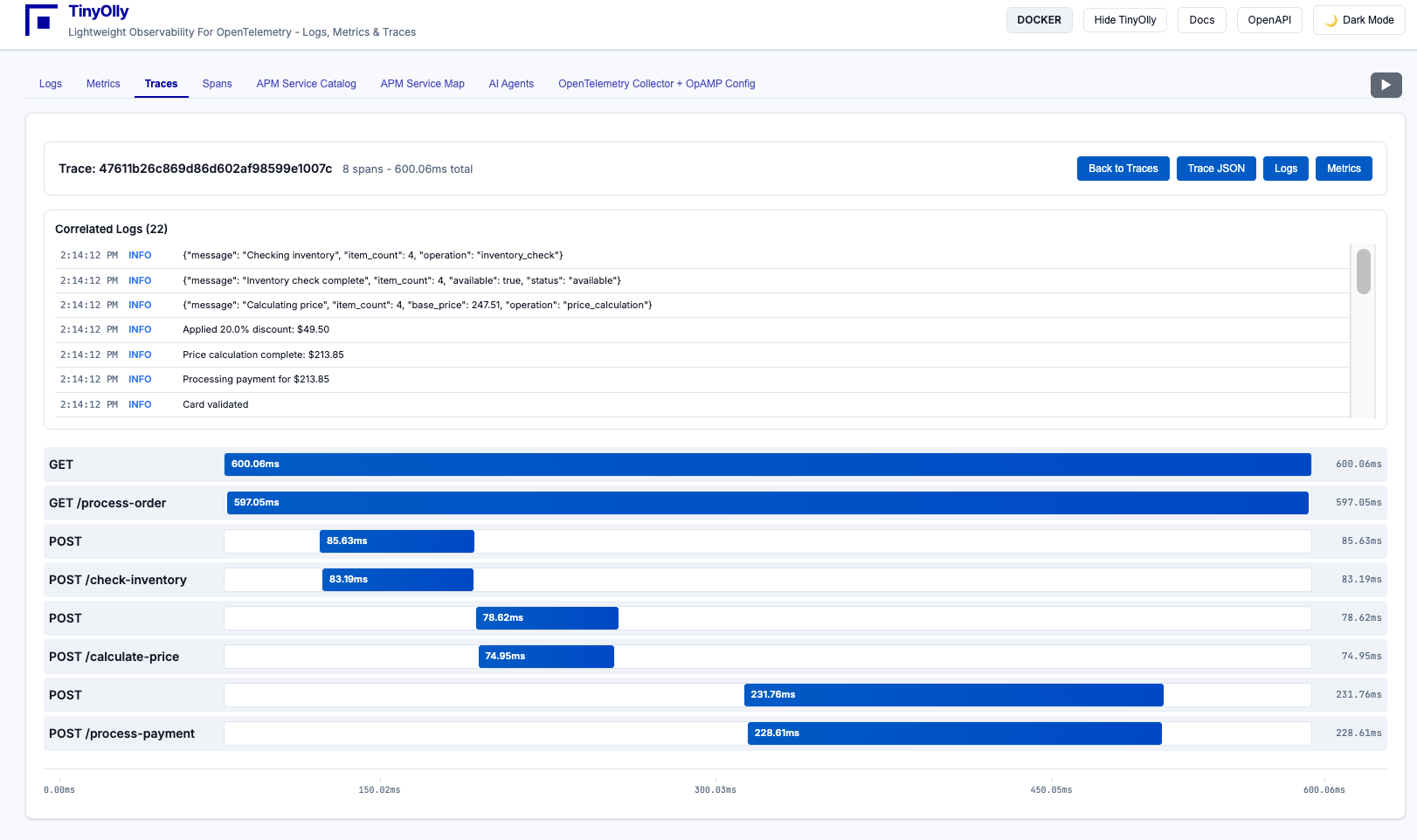 Trace Waterfall with Correlated Logs |
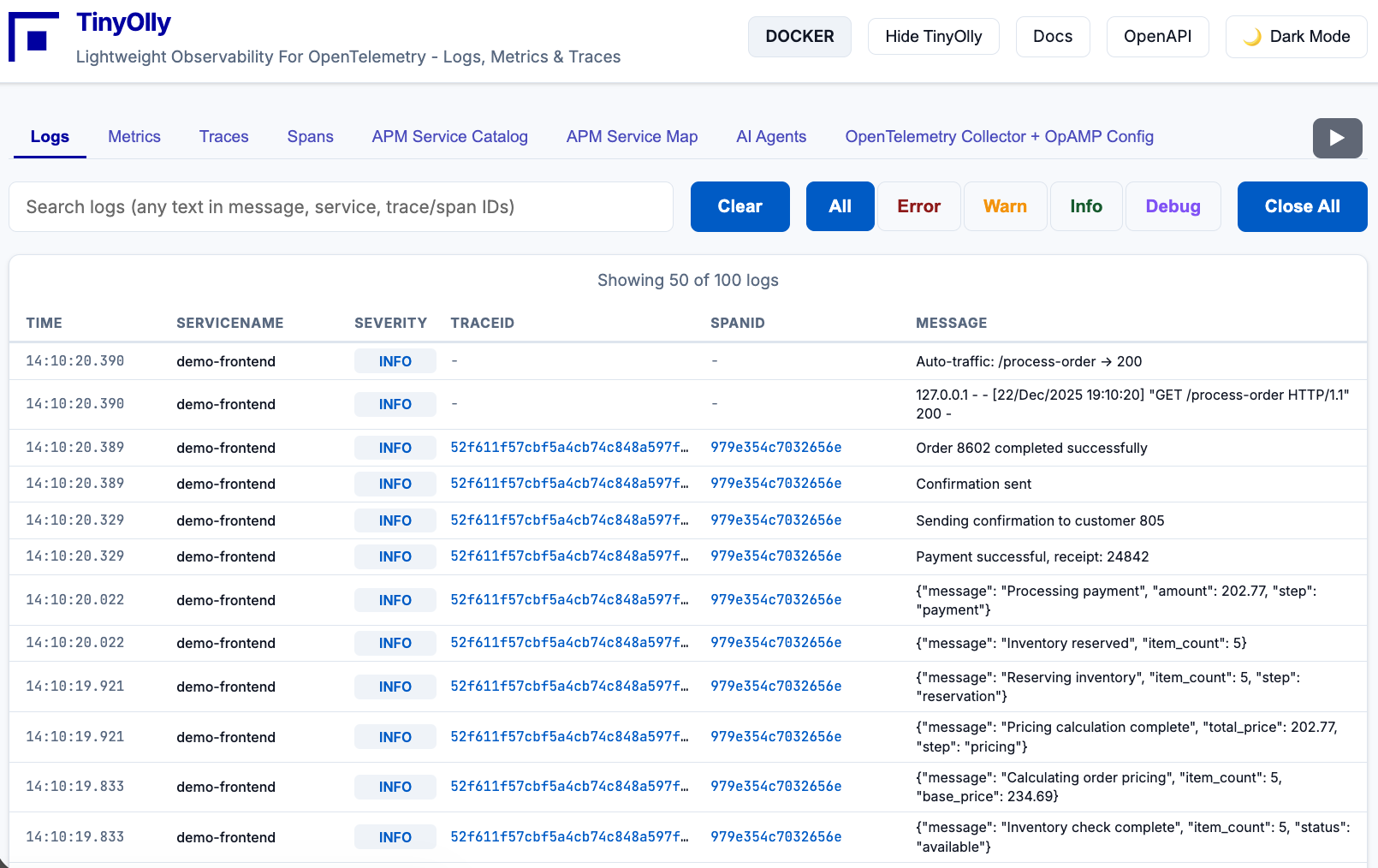 Real-time Logs with Filtering |
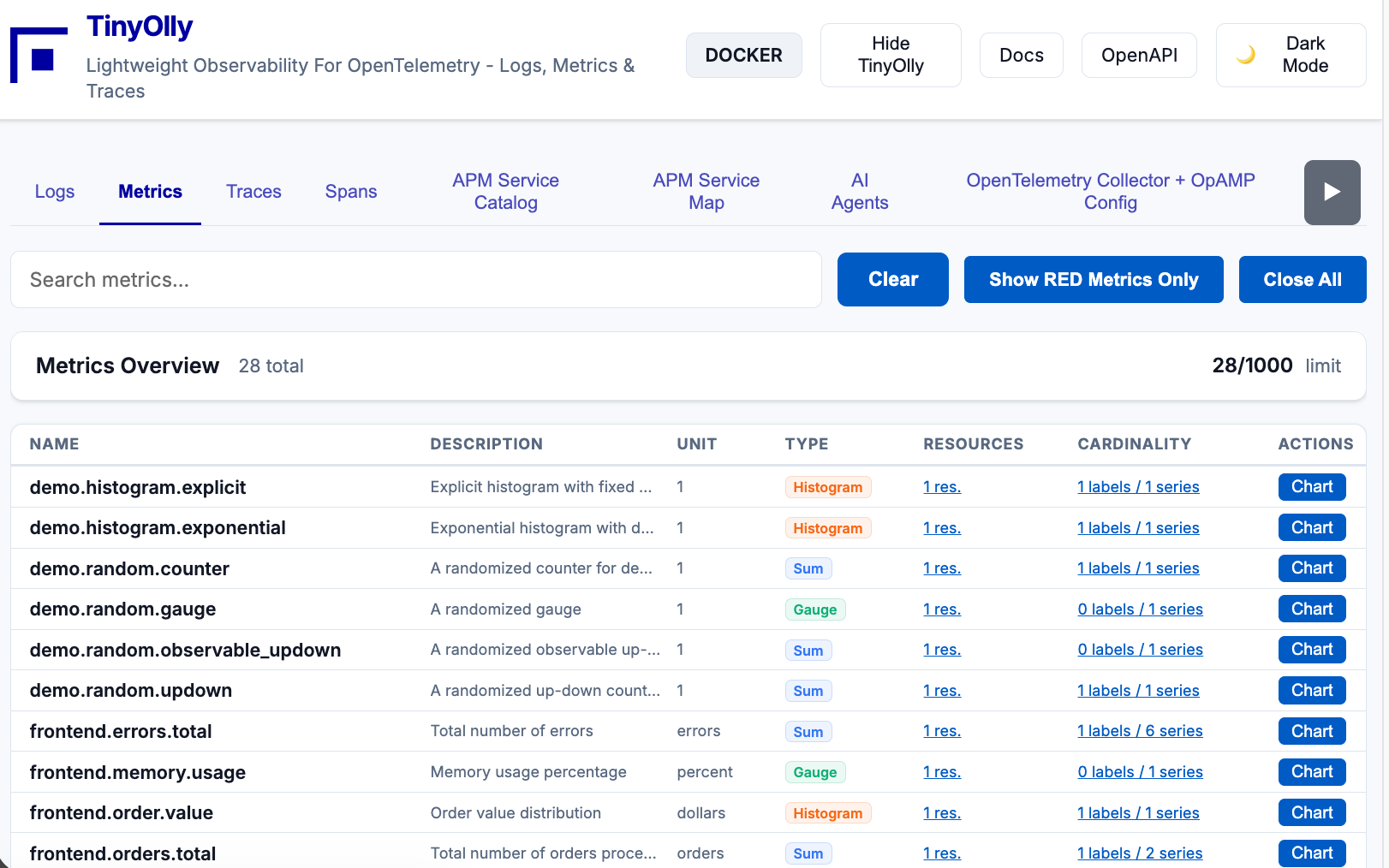 Metrics with Chart Visualization |
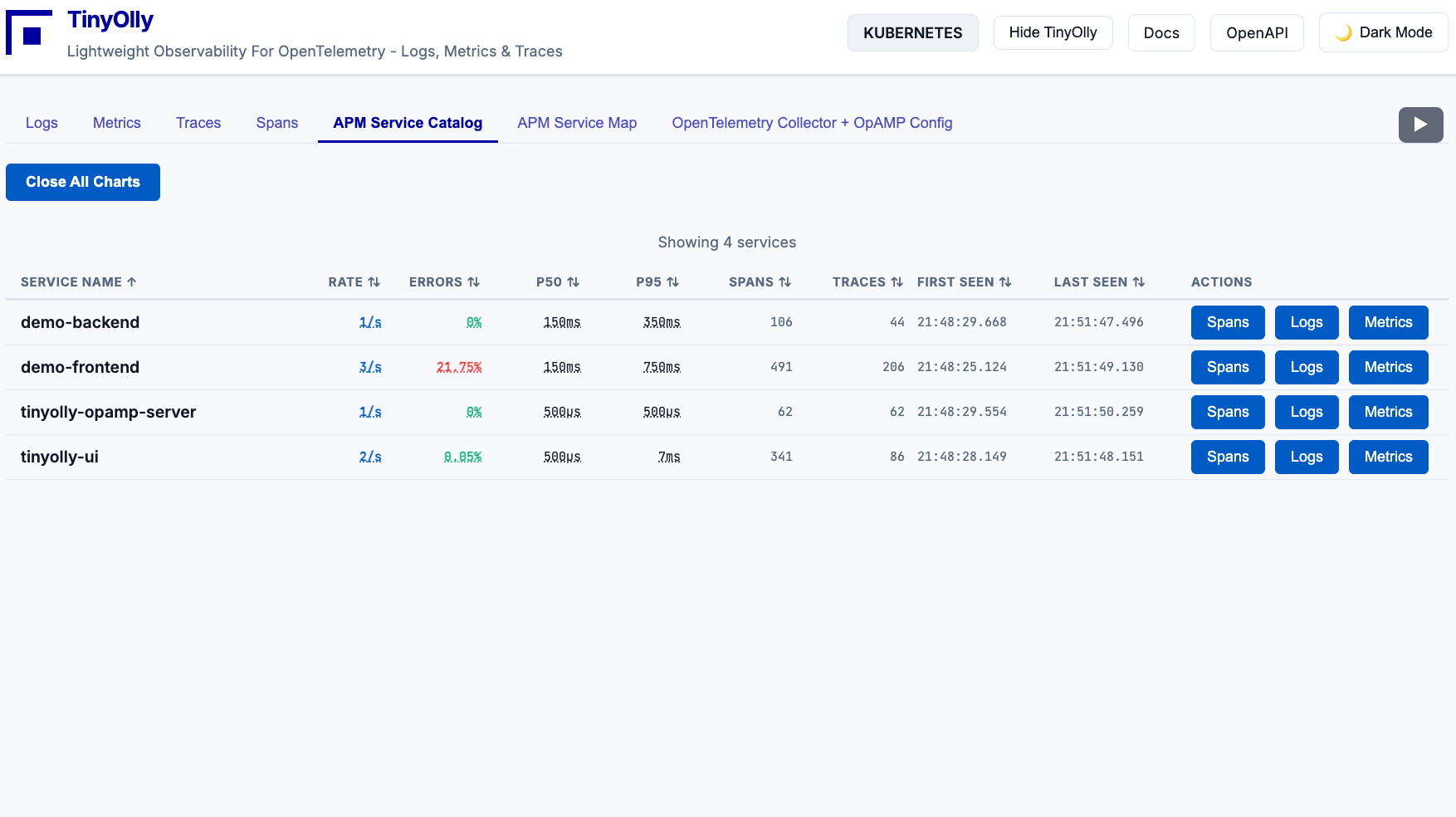 Service Catalog with RED Metrics |
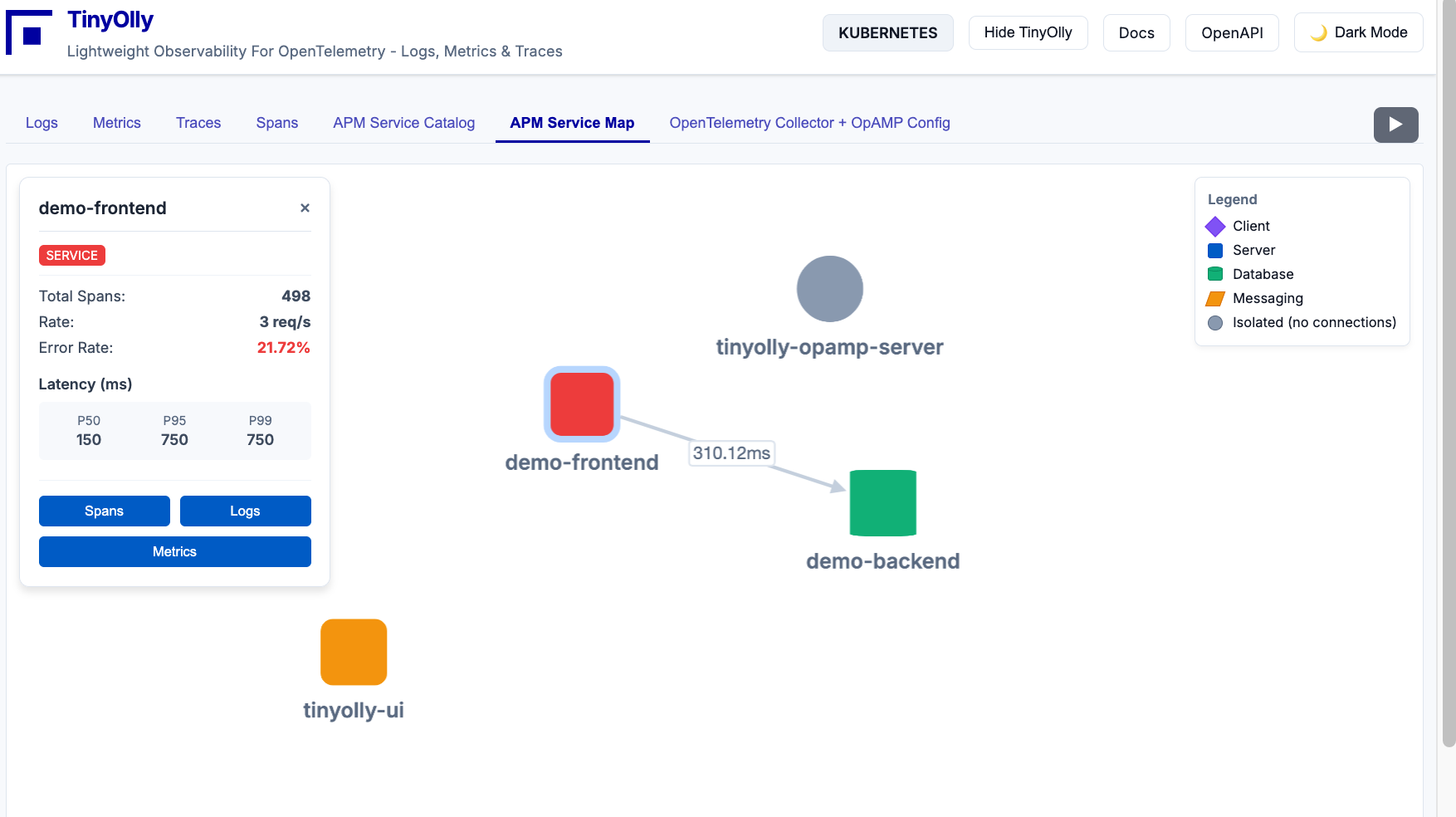 Interactive Service Dependency Map |
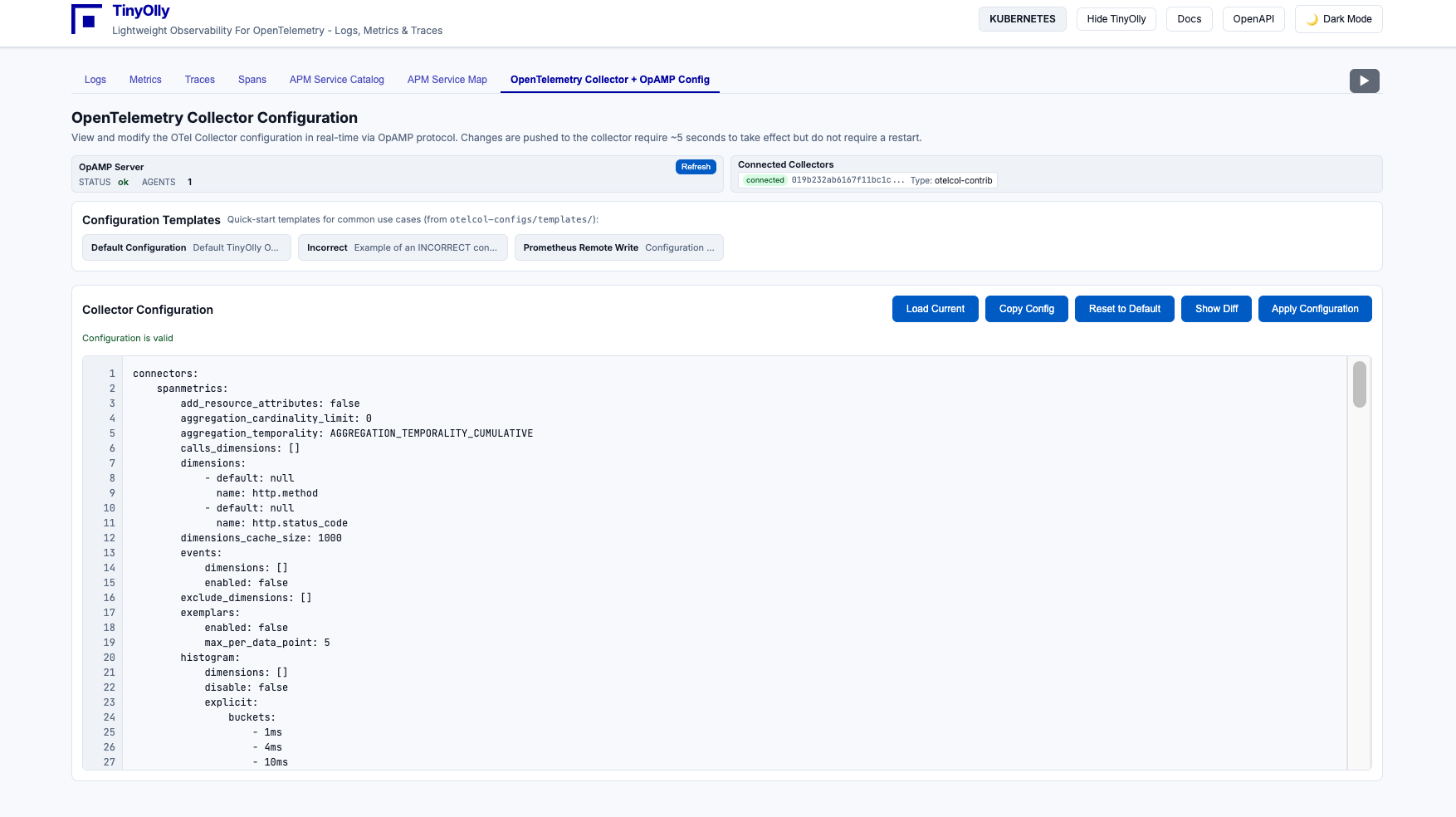 OTel Collector Configuration (OpAMP) |